Can you beat Fishin Frenzy with a system? (Spoiler: no, but here's what you can do)
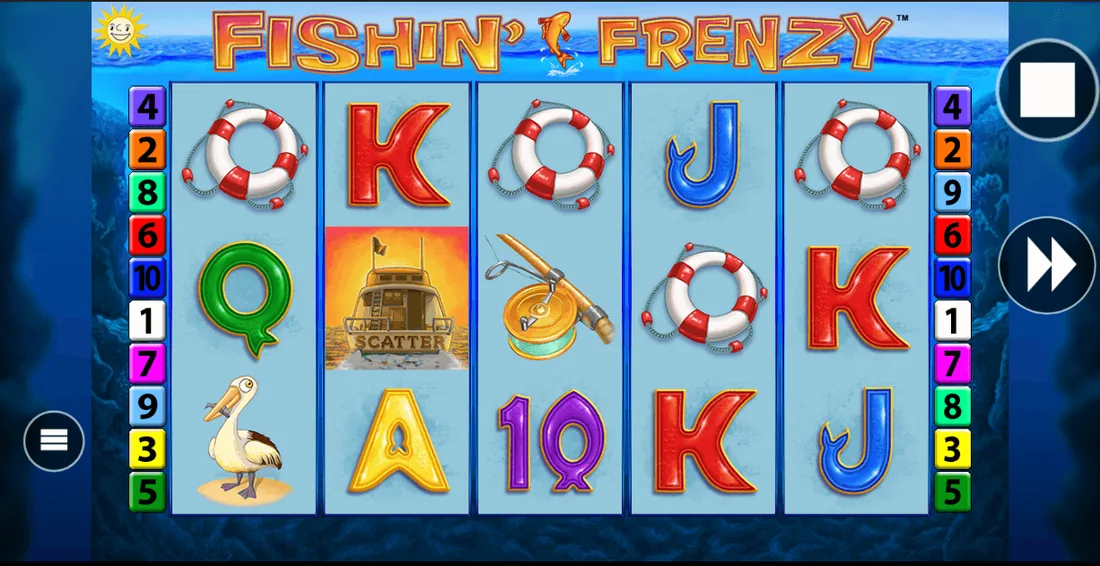
Every week someone Googles «how to win at Fishin Frenzy». The honest answer: you can't force it. The game runs on certified RNG — random number generation — which means every spin is independent, every outcome already decided the moment you press the button.
But that doesn't mean you're powerless. You can't control the reels, but you can control the stake, the session length, and the moment you walk away. This is the difference between playing smart and chasing a pattern that doesn't exist.
The first ten minutes: where most myths are born
You hit three dead spins, then land a 12x win. Your brain starts building a story: the machine is warming up, or it's cold, or it's about to pay. None of that is true.
Fishin Frenzy is a 5-reel, 10-payline slot built by Reel Time Gaming and distributed by Blueprint Gaming. It runs at 96.12% RTP — return to player — which is a long-term average across millions of spins, not a promise for your session. Medium volatility means the game sits somewhere between frequent small wins and rare big hits, but that's a statistical description, not a timetable.
The RNG is tested and certified under UKGC rules. Every spin is independent. The machine has no memory, no cycle, no hot or cold phase. If you see a pattern in ten minutes, that's your brain doing what brains do: finding order in noise.
The myths that cost you money
Here are the strategies people swear by, and why they don't work:
- «Bet higher after a losing streak» — the Martingale and its cousins. The RNG doesn't care what you lost three spins ago. Doubling your stake doesn't improve your odds; it just drains your balance faster. On a £5 maximum stake (or £2 if you're aged 18–24 under UKGC rules), you'll hit the cap in four doubles anyway.
- «The bonus is due» — the idea that 100 dead spins means free spins are coming. The scatter symbols have the same probability on every spin. You could go 500 spins without a bonus, or hit two in ten spins. Neither outcome makes the next spin more likely to pay.
- «Play at certain times of day» — the notion that slots pay better at 3am or after a jackpot hits elsewhere. The RNG runs continuously and has no idea what time it is or what happened on another player's screen.
- «Autoplay is rigged» — the game code is identical whether you click manually or let it run. The difference is that autoplay makes it easier to lose track of your spend, which is why setting a loss limit is essential before you start.
Every one of these myths treats the slot like a system with memory or a pattern you can decode. It isn't. It's a random process with a fixed return over millions of spins, and your session is a tiny, unpredictable slice of that curve.
What you can actually control
You can't manipulate the RNG, but you can structure the session so a bad run doesn't wipe you out in five minutes. Here's what's in your hands:
UKGC operators must offer deposit limits, and affordability checks kick in from £150 net deposits a month, using credit-reference data at the first stage. These aren't obstacles — they're circuit-breakers that stop a bad night turning into a bad month.
Reading volatility: why medium doesn't mean safe
Fishin Frenzy is classed as medium volatility, which sounds reassuring. In practice, it means you'll see a mix of small wins and dry spells, with the occasional big hit if the fisherman wilds land during free spins and collect every fish value on screen.
Medium volatility doesn't mean you'll win half the time. Over a hundred spins, you could easily be down 60% of your starting balance, then claw back to break-even with one bonus round, or not. The maths guarantees the house edge over millions of spins, but your fifty spins could land anywhere on that distribution.
If you're playing 50p spins with a £25.00 budget, you've got fifty chances. A dead run of thirty spins is completely normal — it's not the game punishing you, it's variance. Lower your stake to 20p and you get 125 spins from the same money, which smooths the ride but doesn't change the RTP.
The bonus round: where the big wins live (and the big losses hide)
Three or more boat scatter symbols trigger 10 free spins (or more, depending on the number of scatters). During the bonus, every fisherman wild that lands collects all the fish values visible on the reels, and those prizes add up fast if you're lucky.
This is where Fishin Frenzy's £250,000 maximum win lives — but it's also where most players misread the game. A bonus round can pay 2x your total stake, or 200x, or nothing. The free spins don't guarantee profit; they're just more chances with the same RNG and the same house edge.
The temptation is to keep playing after a weak bonus, convinced the next one will be bigger. The RNG has no concept of compensation. If you've set a session budget of £30.00 and you're down to £8.00 after a disappointing feature, that's the moment to stop — not the moment to chase.
Mistakes that cost more than the house edge
The house edge is built into the RTP: 96.12% back means 3.88% kept by the operator over time. You can't avoid that. But players hand over far more through mistakes that have nothing to do with the maths:
- Playing without a stop-loss. You tell yourself you'll quit when you've lost £20.00, but there's no hard limit set in the account, so you reload twice and walk away down £60.00.
- Chasing losses within the same session. You hit a bad streak, double your stake to win it back faster, and blow through your budget in ten spins.
- Ignoring the withdrawal process. Your first withdrawal from a UKGC site takes 24–48 hours for KYC — documents and identity checks — and then another one to three working days for the money to reach your bank via Faster Payments. If you don't know that, you'll cancel the withdrawal and play it back.
- Using affordability checks as a green light. Just because you pass the £150 a month threshold doesn't mean you can afford to lose it — it means the operator has ticked a regulatory box.
- Trusting unlicensed sites. If the footer shows no UKGC licence number, you're playing on an illegal site with no recourse if something goes wrong. Look the operator up in the UKGC public register before you deposit.
Credit cards have been banned for gambling in the UK since 2020, and your payment method must be in your own name — debit card, PayPal, Apple Pay, Open Banking or paysafecard. Withdrawals come back the same way: e-wallets in a few hours to a day, Faster Payments within two working days, debit card in one to three days.
A session structure that keeps you in control
Here's a framework that respects the maths and doesn't pretend you can beat the RNG:
| Step | Action | Why it matters | |
|---|---|---|---|
| Before you start | Set a session budget (e.g. £25.00) and a loss limit in your account settings | Stops you reloading in the moment | → |
| Choose your stake | Pick a stake that gives you at least 50 spins from your budget (50p if you've got £25.00) | More spins = more variance smoothing, less chance of busting out in ten minutes | → |
| Set a win target | Decide a profit level where you'll stop (e.g. up £15.00) | Walking away with a win is rare enough — don't hand it back chasing more | → |
| Use a timer | Set a 20- or 30-minute countdown on your phone | Time limits protect you from the session creep that kills bankrolls | → |
| Stop at the limit | When you hit the loss limit, the timer, or the win target — whichever comes first — close the game | The next spin has the same house edge as the first; there's no reason to keep going | → |
This won't make you a winner in the long run — the RTP ensures the house keeps 3.88% over time — but it gives you a structure that prevents the kind of tilt-driven losses that hurt far worse than bad luck.
FAQ
Is there a pattern to when the bonus round hits in Fishin Frenzy?
No. The scatter symbols appear according to fixed probabilities on every spin, controlled by certified RNG. You could trigger free spins twice in twenty spins, or not see them for three hundred spins — both are normal outcomes. The game has no memory, no cycle, and no pattern you can decode. Anyone selling a «system» to predict the bonus is lying.
Does the £5 stake cap make it harder to win big?
The £5 maximum stake per spin (£2 if you're aged 18–24) is a UKGC rule, not a game mechanic. It doesn't change the RTP or the max win — you can still hit £250,000 on a 10p spin if the bonus round lands perfectly. The cap exists to slow down losses, not to limit wins. Lower stakes just mean you get more spins from the same budget, which smooths variance but doesn't improve your odds.
Why did my first withdrawal take so long?
UKGC-licensed operators must verify your age and identity before processing a withdrawal — usually within 24 to 48 hours. After that, e-wallets pay out in a few hours to a day, Faster Payments to your bank takes the same day to two working days, and debit card withdrawals take one to three working days. The first withdrawal is always the slowest because of the KYC checks. Subsequent withdrawals are faster, assuming your documents are already approved.